Why You Shouldn't Use Washing-Up Liquid in Your Dishwasher?
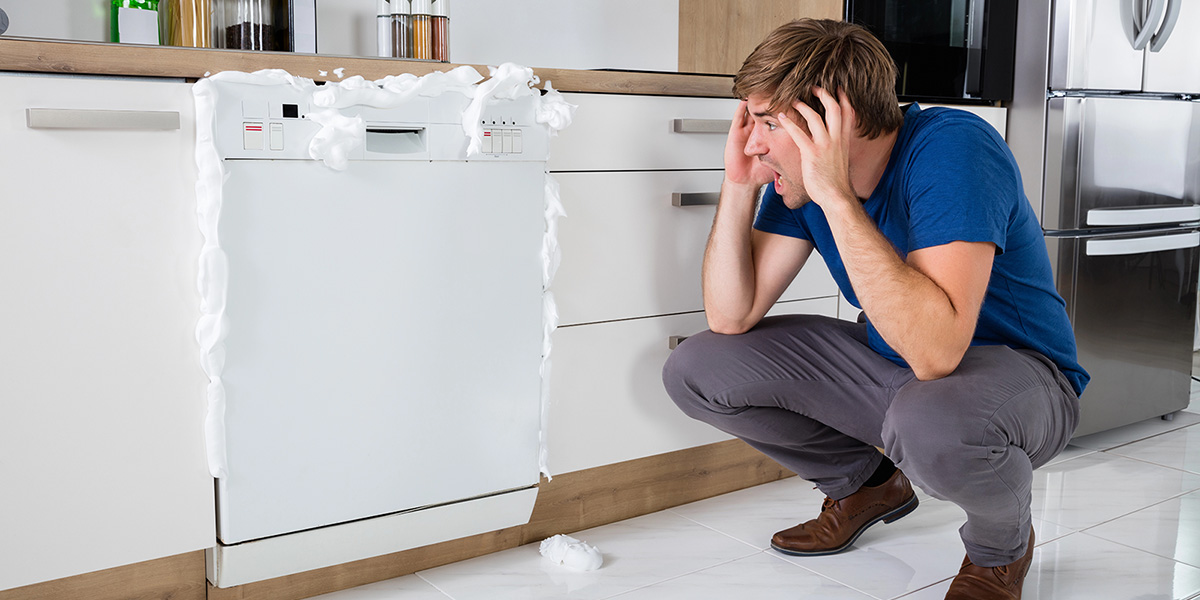
In a nutshell – using hand dishwashing liquid in a dishwasher is a mistake as it creates excessive foam that eventually overflows and could seriously damage your appliance, and your kitchen floor. It also leads to poor cleaning results and potential expensive repairs. Always use dishwasher-specific detergent to avoid these consequences.
Dangers, Consequences, and How to Handle Them
The short answer is – because they are different. Washing-up liquid is designed for hand-washing dishes and creates a lot of foam, which is essential for manual cleaning. In contrast, dishwasher detergent is formulated specifically for machine washing and works without producing excessive foam. Using washing-up liquid in a dishwasher can cause serious problems, such as:
1. Excessive Foam Overflow
Handwashing liquid generates an excessive amount of foam when used in dishwashers, which quickly spills out of the machine and onto the kitchen floor. This can create a mess and a slippery surface, posing a risk of injury.
2. Potential Damage to the Dishwasher
Dishwasher detergents are designed to clean without producing foam. The excess froth from washing-up liquid can block critical components like the pump and spray arms, causing them to malfunction. This reduces the machine's efficiency and could lead to expensive repairs.
3. Poor Cleaning Results
Regular washing-up liquid is not formulated for the mechanical cleaning action of dishwashers. As a result, dishes may come out dirty, cloudy, and greasy. In contrast, dishwasher detergents break down food particles, grease, and hard water deposits effectively.
What to Do and How to Clean Up After Using Dishwashing Liquid in a Dishwasher
If you’ve accidentally used handwashing liquid in your dishwasher, follow these steps to avoid damage:
Step 1: Stop the Dishwasher Immediately
If you realize that you’ve used the wrong detergent, or notice foam leaking out, turn off the dishwasher immediately to prevent further foaming.
Step 2: Remove Excess Foam
Open the dishwasher and remove the foam. Use a container to scoop it out and towels to soak up any excess. Clean as much foam as possible to prevent clogging the pump and spray arms, and take out the dishes.
Step 3: Rinse the Dishwasher (with White Vinegar)
Place a bowl of white vinegar on the top rack of the empty dishwasher and run a rinse cycle. Vinegar helps break down soap and foam. Repeat the rinse cycle if necessary to eliminate remaining foam.
Step 4: Run Another Rinse Cycle (with Baking Soda)
After the vinegar cycle, sprinkle a cup of baking soda on the bottom of the dishwasher and run another rinse cycle. This helps clean any remaining foam and neutralizes the washing-up liquid.
Step 5: Check for Blockages
Once the dishwasher is well-rinsed, check the spray arms and filter for any soap residue. For best results, remove and clean these parts, using white vinegar or a small amount of kitchen or limescale cleaner to remove any soap residue.
How to Prevent This Mistake in the Future
To avoid making this mistake again, follow these tips:
- Keep Dishwasher Detergent on Hand: Always have a supply of dishwasher detergent and store it near the machine, if possible.
- Label Bottles Clearly: If you store washing-up liquid and dishwasher detergent together, label them clearly to avoid mixing them up.
- Avoid Substitutes: If you run out of dishwasher detergent, delay starting the dishwasher. If dishes must be washed immediately, hand-wash them instead of using substitutes.
Conclusion
Using hand dishwashing liquid in your dishwasher can lead to unpleasant and potentially damaging effects on your machine. Foam overflows, poor cleaning results, and the risk of costly repairs make this mistake a costly one. To avoid these issues, always use the right detergent in your dishwasher to keep it running smoothly and efficiently for years to come.

Repairs4U provides professional same or next day dishwasher repairs services across all areas in London. Please call us on +44 20 8146 6924 for assistance.