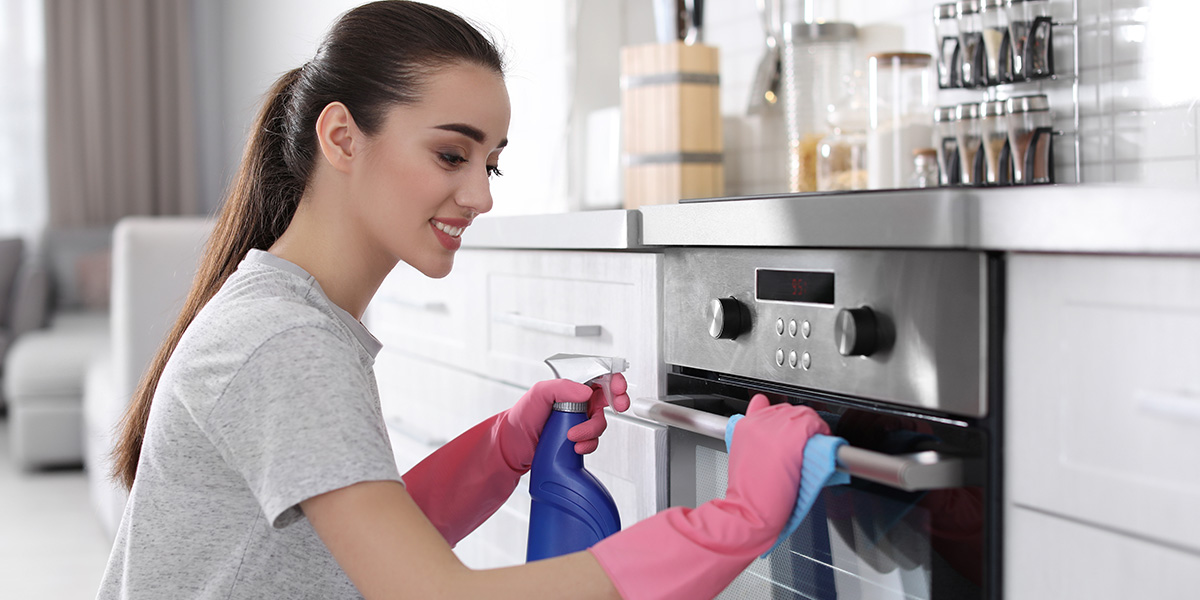
For some, cleaning the oven after each use is part of a routine. And although this should be how we take care of this appliance, that’s not always the case, with various reasons preventing us from cleaning our oven straight after baking or roasting.
Hopefully, this cleaning guide will help you clean your oven much quicker and more efficiently, without turning the process into an unpleasant chore. Or, if you are in the process of buying a new cooker or oven, this article may help you take into consideration where the cleaning stands as a priority.
Understanding Your Oven Type
It is important to know what type of electric oven you have, which will determine what cleaning method to apply so you don’t damage it in the process by using unsuitable detergents and equipment. Whether it’s an integrated oven or a free-standing cooker, we can categorise them in two groups according to the cleaning method – self-cleaning and conventional. Although the cleaning techniques (or cycles for some) used for each group could be viewed as similar, they still vary in many different ways. And, regardless of the type of oven you have, you’d still need to clean the door by hand.
- Self-Cleaning Electric Oven – This type of electric ovens has been designed with a built-in self-cleaning cycle, and despite its name, still needs regular care and a few manual finishing touches.
- Conventional (Regular, Traditional) Electric Oven – Conventional, or regular, electric ovens require a different approach to cleaning, compared to the other type. The time, detergents and equipment used would vary, depending on how often you use and clean your appliance.
Safety Precautions
- Always wear gloves and a protective mask when using oven cleaning detergents, as they contain harmful chemicals.
- Keep the windows open and make sure the kitchen is well-ventilated during the cleaning process.
- Make sure that kids and pets are not in the kitchen while you are cleaning the oven.
- Cover the floor around the oven with old dusters to protect it in case of detergent spillage.
How to Clean a Self-Cleaning Electric Oven
These electric ovens have been designed with built-in self-cleaning cycles. They use different modes of cleaning. And although the name would suggest that no intervention is necessary, they still need additional attention and care, especially the oven door.
Pyrolytic Oven
Pyrolytic ovens use very high temperatures of 400 to 500°C for their self-cleaning cycle. The programs vary in time, and can take between 2 and 6 hours. The extreme heat turns all food debris and grease into ash that you need to wipe after the cycle has finished. The downside is that the temperature is way too high for the oven’s racks, which means they have to be removed and washed by hand. Many people are deterred by how high the cleaning temperatures get, but these ovens are very safe, as they have a door lock feature that ensures the door stays firmly shut throughout the process, and only opens when the oven has cooled down and safe to do so. The oven is also very well insulated, ensuring the heat is contained.
- Remove oven racks, and any trays or other cookware you may have inside. To clean the racks – depending on how dirty they are, you can either soak them in hot water and washing up liquid before giving them a good scrub, or cover them with a detergent specifically designed to clean burnt grease and food – either oven or kitchen cleaner.
- Remove any leftover clink film or kitchen foil pieces that might have fallen at the bottom of the oven.
- Scrape and clean baked - on food from the oven’s floor.
- Run the self-cleaning cycle - most models allow you to adjust it according to how dirty your oven is. Make sure the self-lock is on and in working order - this is extremely important safety feature because of the very high temperatures that are reached during the cleaning.
- Once the oven has cooled down, open it and wipe the ash.
- Clean the oven door.
- Put the washed and dried racks back in the oven.
Catalytic Oven
Also called Textured or Continuous, the Catalytic self-cleaning oven’s interior has rough lining, which is very effective at absorbing and burning splashes of grease and other spills as well as food debris. The lining’s surface has been treated with specials chemicals and materials that work as catalysts for the process. The good thing regarding the self-cleaning of this oven is that the process doesn’t require extreme heat – 220°C, and if you regularly cook at around that temperature, you’ll need to clean the oven less often. The downside is that in some models, the catalytic lining doesn’t cover the corners, and you’ll have to clean them manually. These ovens are also called textured or continuous.
- Remove the racks from the oven and clean them separately – either by submerging them in a solution of hot water and dishwashing liquid, or by using a detergent such as oven or kitchen cleaner.
The catalytic oven won’t damage the racks if they are left inside during the self-cleaning cycle as the temperature used is not too high, but might further burn up any leftover grease or food residue. - Remove trays or pans and pots, or other cookware left in the oven, and clear away lingering food particles.
- Try to remove stuck-on burnt food from the bottom of the oven.
- Clean the edges and corners that are not covered by a special lining, using the appropriate detergent.
- Run the self-cleaning cycle. Once finished, wipe away any residue that’s left.
- Clean the oven door.
- Replace the oven racks.
How to Clean Conventional (Regular) Electric Oven
These ovens interior surfaces are covered with enamel, which is a highly durable material. Unfortunately, this type of lining requires manual cleaning only. The good news is that because enamel is very smooth, it doesn’t absorb odours, and food and grease don’t stick easily. Despite this, make sure to clean your oven regularly as baked on food and grease take longer and more efforts to remove.
If your oven has a Steam-Cleaning feature, make sure to opt for it regularly. Using water and heat to loosen food and grease residue, the cycle runs between 1 and 1.5 hours. It is perfect for in between deep cleans, and will also speed up the process of manual cleaning.
- First, make sure to lay old towels around the cooker, or underneath the oven door, if integrated, and unplug the appliance.
- Clear out baked on food debris, using a spatula.
- Run a Steam-Cleaning cycle, if your oven has the feature – it will help loosen grease and stuck-on burnt food. One finished, wipe the inside of the oven.
- Remove the racks and place them at the bottom of the oven.
- Spray or cover the racks, walls and inside of the door with cleaning detergent. Let It work as per instructions, then scrub well and wipe with a damp towel – you may have to repeat a few times, depending on how dirty your oven is, until the towel comes out clean.
- For severely burnt patches, reapply detergent, and use a scraper. Wipe away any residue.
- To avoid damage, don’t use abrasive cleaning materials or sponges, especially on a glass door.
Cleaning your electric oven doesn’t have to be a dreaded task. By understanding your oven type and following our cleaning advice, you can maintain its efficiency and prolong its lifespan. Whether self-cleaning or conventional, regular care will ensure better performance and hygiene and keep your oven in top condition.

Repairs4U provides professional same or next day electric oven repair services across all areas in London. Please call us on +44 20 8146 6924 for assistance.