Essential Tips on How to Buy a Dishwasher
Choosing a dishwasher depends on factors like size and type, cleaning power, and key features that suit your needs. Energy efficiency is another important factor to consider, as is the dishwasher’s durability. Set a budget, compare warranties, and read the reviews.
Dishwasher Buying Guide
It sounds simple, buying a dishwasher. After all, its role is to wash the dishes and save you from doing it by hand, right? But there are several factors to consider first, and here we put together a comprehensive guide to help and make your choice easier. Hope it helps.
1. Consider Dishwasher Types, Installation and Size Options
Whilst the dishwasher you choose will mainly be influenced by the type of kitchen you have, there are many options available according to size and installation options.
Built-in Dishwashers
You can choose between fully integrated or semi-integrated. The difference is that the fully integrated dishwashers are completely concealed behind a cabinet door, whereas the semi-integrated dishwashers’ control panel is positioned at the top front of the door and visible, while the rest is hidden, combining convenience and aesthetics.
- Full Size Dishwashers: These dishwashers’ size varies in depth, and usually have the same width and height, compared to free-standing. They have the control panel on the top of their door, when opened. Depending on the space you have, you can choose between standard size, oversized, and compact (slimline).
- Drawer Dishwashers: Also built-in dishwashers, these are more compact compared to the full-size ones, and have single or double-drawer options.
Freestanding Dishwashers
These appliances come in different sizes, with varying width, depth, height, and color, and usually with a lower price tag.
- Full Size Dishwashers: These dishwashers are also installed permanently underneath the kitchen countertop. The control panel is positioned at the front of the door, making it easier to track the progress of the washing cycle. Here as well you can choose between standard size, oversized, or slimline (compact).
- Portable Dishwashers: Portable units with wheels that can be easily rolled in a corner or stored away when not in use. Suitable for dynamic small spaces.
- Countertop Dishwashers: Although these could also be considered portable due to being smaller and lighter than a full-size dishwasher, they sit on the counter and are connected to the faucet. Beneficial for small spaces or light dishwashing needs.
2. Compare Program Options and Cycle Flexibility
Standard Dishwasher Programs
- Normal Wash: The most standard cycle for everyday dishes that are washed fairly quickly after being used, and have been cleared well of food particles.
- Soak/Pre-Wash: Soaks up the dishes before main wash to helps soften and loosen up hardened food residue.
- Quick/Express Wash: Perfect for dishes that are not that dirty, and don’t need a full washing cycle.
- Rinse Only: A short cycle to quickly rinse the dishes without detergent. This prevents food residue from drying on dishes, which would otherwise make it more difficult to wash in the main cycle.
- Sanitize Cycle: High water temperature is used to kill bacteria and sterilise the dishes – perfect for baby items.
- Half-Load: Designed for when there aren’t enough items for a full load. You can use either the bottom or the top rack – depending on the model, to run a cycle that uses less water and energy.
- Delicate/Glassware: Gentle wash cycle with lower water pressure and temperature in order to protect fragile items like glassware, crystal, or china.
- Heavy Duty Cycle: This is great for heavily soiled dishes or cookware with baked-on food as it uses high water temperature for more intense cleaning.
- Eco/Energy Saver: Runs longer but uses less water and electricity, perfect for slightly dirty dishes.
Advanced Dishwasher Features
- Auto or Sensor Wash: Soil Level Sensors measure the soil level of the dishes and adjusts the washing cycle accordingly, delivering perfect results whilst still saving water and energy.
- Delay Start: You can use it to schedule the washing cycle to take advantage of off-pick hours, and save on energy bills.
- Auto-Dosing: Dispenses the optimum amount of detergent based on load size and how dirty the dishes are.
- Load Size Detection: Automatically adjusts the cycle, taking into consideration the load size, using the optimum amount of water and electricity.
- Smart Load Distribution: Balances spray strength according to how dishes are loaded in the dishwasher, ensuring thorough cleaning.
- Hard Water/Softening System: This is a built-in water softener that helps to prevent limescale deposits from forming. Highly recommended feature for areas with hard water.
Specialised Cleaning Options
- High-Temperature Wash and Steam Cleaning: The steam loosens tough stains and, combined with high temperature, removes grease more effectively.
- Bottle Wash Jets: This feature is specifically designed for cleaning deep or narrow items like bottles, jars, and tall glasses, using jets.
- Zone Wash or Targeted Cleaning: Some dishwashers have designated zones for heavily soiled items – usually pots and pans, while the rest of the dishwasher is loaded with typically dirty dishes. They are all washed in one cycle, saving on water and electricity.
Specialised Drying Programs
- Auto-Open Drying: Some dishwashers automatically open their door after a cycle to release steam and speed up air drying.
- Heated/Fan Drying: Fan- assisted heat is applied to ensure the removal of moisture and water spots, leaving dishes completely dry and ready to use.
Safety Features
- Child Lock: Prevents children from opening the door, and accidental change to the running program.
- Anti-Flood: Uses a sensor to detect water levels, and stops the dishwasher if there is a leak. Essential for preventing flood or other water related damage.
3. Think About Energy Efficiency
- Energy-efficient models dishwashers save on water and electricity consumption, which also makes them more environmentally friendly. Check the energy ratings before buying – the most efficient energy savers are marked with A, with G at the bottom of the grading system.
- Eco Cycles: Some dishwashers have integrated eco-friendly cycles designed to use less water and energy. They are perfect for dishes that are not that dirty.

Repairs4U provides professional same or next day dishwasher repairs services across all areas in London. Please call us on +44 20 8146 6924 for assistance.
4. Consider Interior Layout and Racks
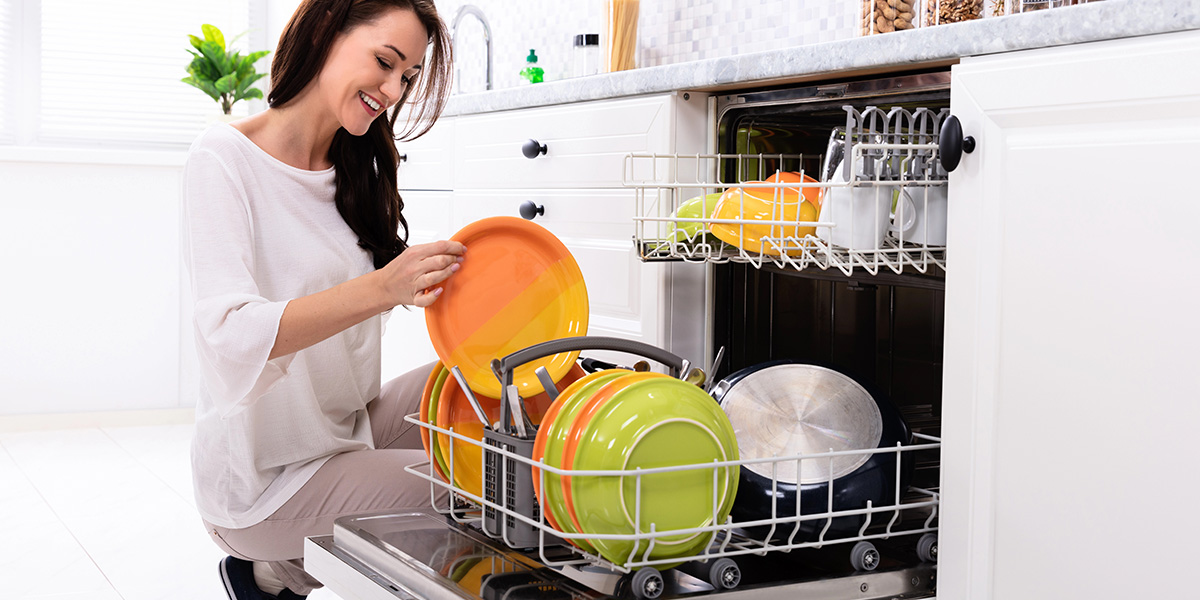
- Adjustable Racks: Many models of dishwashers now come with adjustable racks, which makes it possible to fit different sizes of dishes, pots, and pans.
- Third Rack: Most modern dishwashers have a third rack on top for utensils and other small items, leaving more space for dishes and cookware on the other shelves.
- Foldable Tines: Foldable tines help maximising space, and make it easier to wash larger items.
5. Think About Smart Features
The rise of the integration of smart features in dishwashers brings convenience and efficiency. This could be especially useful in busy households.
- Wi-Fi Connectivity and App Control: You can track and control cycles remotely from anywhere, using the manufacturer’s app. Start, pause, or stop the dishwasher, receive notifications and alerts, and also information about water and energy consumption.
- Voice Control: Some modern dishwashers are integrated with Google Assistant, Amazon Alexa or Apple Siri, allowing you to use voice commands to control them or check on cycle status. This feature is very helpful for hands-free management.
- Cycle Tracking and Customisation: Some models allow you to track cycles in real time, and even suggest how to optimise them based on your previous preferences.
- Auto-Dosing Detergent Dispenser: Dispensing the exact amount of detergent using sensors to detect the load size and how dirty the dishes are helps not only lower the cost of each wash, but also ensures perfect results. And you also receive notifications when the detergent is running low.
- Maintenance and Diagnostic Alerts: Some dishwashers have a self-diagnosis feature allowing them to detect issues such as clogged filter or a door that is not sealed properly, then notifying you about the problem. You can also receive maintenance reminders about when it’s time to add rinse aid or clean the filters.
- Eco-Friendly Scheduling: Allows you to set your dishwasher to run during off-peak hours, lowering the cost of electricity bills.
- Energy Tracking: Some models provide real-time or previous usage information. Based on this data, you can optimise the appliance’s settings to save on energy.
- Smart Home System Compatibility: Allows for integration with smart home ecosystems, giving you the option to manage multiple smart appliances from one app.
6. Think About Build Quality and Materials
- Stainless Steel interior: More durable and quieter, also retains heat better than plastic, which ensures improved drying results and higher energy efficiency.
- Quality of Spray Arms: Models with multiple spray arms, spray zones or rotating arms guarantee optimum water coverage, and as a result – better washed dishes.
7. Set a Budget
Dishwashers vary in price depending on quality of build, size, and features. Think about what has priority when it comes to your needs, this will help you find a model within your budget.
8. Read Reviews and Compare Warranties
- User Reviews: These are always useful for gaining information first hand based on the consumers’ experience about cleaning performance and reliability.
- Warranty: Some brands offer extended warranties or service plans that might be worth paying attention to as they are very likely to save you frustration and high-cost repairs in the long run, especially for the higher-end models.