How to Protect Yourself When Repairing Kitchen Appliances at Home?
To stay safe while repairing kitchen appliances, disconnect power, wear PPE, use proper tools, avoid water exposure, and ensure ventilation. Follow manufacturer instructions, handle sharp parts carefully, and seek professional help if unsure.
Top Health & Safety Tips for Electrical Appliance Repairs: Protecting Yourself and Your Home
With the rising cost of living, the thought of repairing our household appliances is a tempting one, and some do succeed to do so without the help of a professional technician. As well as cost-effective, it is also satisfying and encouraging to know that we can be self-sufficient.
But when attempting DIY appliance repairs, it's crucial to prioritise yours and the safety of your family and home. Following these essential steps will help you stay safe and protect everyone around you.
1. Disconnect Power Sources
Before attempting any repair work, always make sure that the appliance is disconnected from power - unplug from the electrical outlet or switch off the appliance's circuit breaker to avoid the risk of electric shock.
2. Use Appropriate Personal Protective Equipment (PPE)
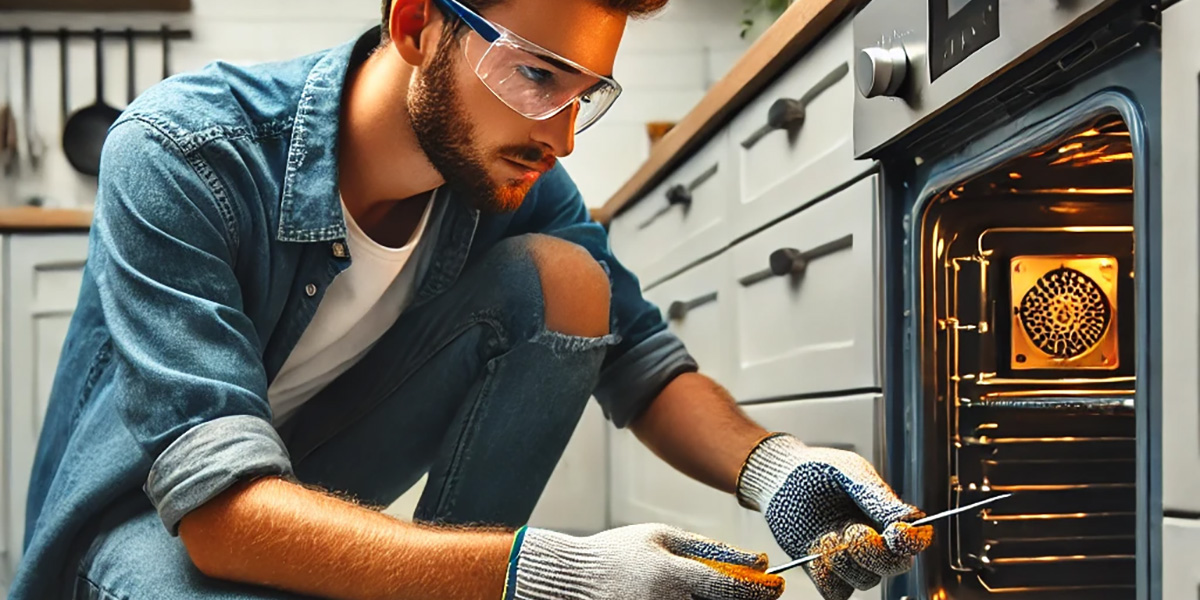
When repairing kitchen appliances, using the right safeguarding equipment is essential, and potentially life-saving. Wear safety glasses to protect your eyes, and gloves to avoid your hands being injured on sharp components. Rubber-soled shoes will save you from electric shocks, as they provide insulation.
3. Familiarise Yourself with the Appliance
Make sure to thoroughly read the appliance's user manual before starting with the repair. If you don't have it at hand, contact the manufacturer for instructions, or go to their website and download the manual. It is crucial to understand how the appliance works to avoid the risk of accidental damage or injury.
4. Use the Correct Tools
Using the appropriate tools when repairing kitchen appliances helps to avoid injuries or damages. Make sure the equipment is in good condition, and do not attempt to substitute tools if you don't have the ones that are required.
5. Avoid Water Exposure
Water poses a safety hazard when in contact with electrical appliances as it increases the risk of electric shock. Never start repairs before making sure that the working area is dry, and also do not work near a sink or other water sources.
6. Be Careful with Sharp Components
Some kitchen appliances have sharp edges or components. When handling repairs, make sure to wear protective gloves to avoid injuries.
7. Be Cautious with Moving Parts
Some appliances have moving parts that can turn or spin if not secured prior to repair. Make sure to take precautions to prevent injuries.
8. Ensure Proper Ventilation
A well-ventilated working environment must be prioritised when repairing appliances that produce fumes or there is a possibility of a chemicals leak. To avoid inhaling harmful substances, ensure to properly ventilate the premises beforehand, and wear a protective mask in case of a leak whilst the repair is ongoing.
9. Test After Repair
Once you have finished the repair, you should test the appliance. After connecting it to a power source, see if it works properly or there are any unusual noises or smells that would indicate that the repair has not been successful.
10. Know When to Seek Professional Help
Only ever attempt DIY appliance repairs if you have the necessary knowledge and skills to do so. Make sure to have thoroughly read and to have the user's manual at hand if you need to refer to it. If you are even slightly unsure of what needs to be done for a successful and safe repair, do not continue, and contact a professional technician.
Stay Safe and Repair with Confidence
We hope that by following these health and safety tips, you'll be able to undertake successful appliance repairs whilst avoiding the risks of injuries. Your personal safety, and that of your household, must be a priority at all times. When working, adhere to manufacturer's instructions, using the right equipment, and wearing protective gear to ensure you are safe, and the kitchen appliance in question has been successfully repaired.