Is There a Difference Between Ceramic and Induction Hobs?
Yes - ceramic hobs use electric heating elements, while induction hobs use electromagnetic fields. Induction is faster, safer, and more efficient but requires magnetic cookware and costs more.
Are Ceramic Hobs and Induction Hobs the Same?
When your electric cooker stops working or the time has come to upgrade your kitchen appliances, apart from deciding on a brand and model, there is a question many of our customers have been asking: Is a ceramic hob the same as an induction hob? The confusion comes from the hobs' appearances - they look nearly identical at first glance as both have glass-ceramic surfaces, but beneath it ceramic and induction hobs are quite different. They work differently, perform differently, and also differ in how they are repaired.
In this article we'll explain how they function, the pros and cons you should consider when buying a new appliance, and what you need to know when it comes to repairs.
What is a Ceramic Hob?
A ceramic hob is a type of electric hob that uses heating elements beneath its glass-ceramic surface. When you turn on the hob, the element heats up and transfers heat to your pan through the glass. You'll see red glow which indicates that the hob is hot.
How It Works:
- Heat is generated by electric resistance elements.
- Heat passes through the glass surface to the cookware.
Pros:
- Sleek and modern design.
- You don't need special cookware.
- Usually more affordable than induction.
Cons:
- It is slower to heat up and cool down when compared to induction.
- Less energy efficient.
- The surface stays hot for some time after use.
- Spillages burn onto the surface, which makes cleaning more difficult.
What is an Induction Hob?
An induction hob also has a smooth glass-ceramic surface, but it works in a completely different way. It uses electromagnetic fields to heat the pan directly, instead of heating the glass.
How It Works:
- Uses electromagnetism to generate heat.
- Heat passes directly to the cookware.
Pros:
- Heats up quickly and cools down fast.
- Energy efficient — almost no heat is wasted.
- Safer — the surface doesn't get hot unless a pan is present.
- Easier to clean — food spills don't burn onto the hob.
Cons:
- Only works with magnetic cookware like cast iron or induction-compatible stainless steel.
- Usually more expensive to buy.
- More costly to repair due to technicality.
Ceramic vs Induction Hob: Key Differences
| Feature | Ceramic Hob | Induction Hob |
|---|---|---|
| Heating Method | Electric elements | Electromagnetic fields |
| Heat Speed | Slower | Fast |
| Energy Efficiency | Moderate | High |
| Safety | Hot surface stays hot | Cool surface, safer |
| Cookware Compatibility | Most pans | Magnetic pans only |
| Cleaning | Can be difficult | Easier, spills don't burn on |
| Cost | Lower upfront | Higher upfront |
| Repair Complexity | Simpler | More complex and specialised |
Common Repair Issues with Electric Hobs
Whether you have a ceramic or induction hob, it's very likely that you'll need a specialist for some minor or more serious problems from time to time.
Ceramic Hobs
- Heating zones not working.
- Cracks or damage to the glass surface.
- Malfunctioning control knobs.
- Seriously burned-on residue reducing the hob's effectiveness.
Induction Hobs
- Hob not recognising compatible cookware.
- Error codes on the digital display.
- Electrical faults or circuit board issues.
- Touch controls not responding.
Should You Try DIY Repairs?
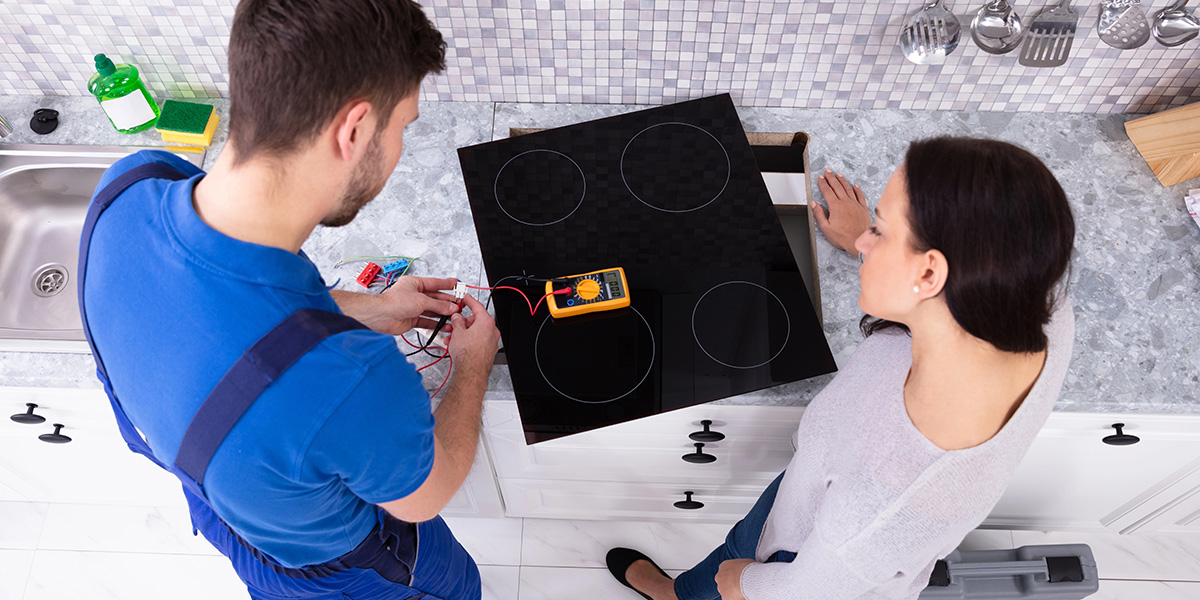
Cleaning or resetting the hob would be safe to do yourself, but most electric hob repairs should be left to trained professionals. Both ceramic and induction hobs involve delicate components, and DIY repairs - even if you have some knowledge, can lead to unpleasant outcomes:
- Electrical shock.
- Further damaging the appliance.
- Voiding your appliance's warranty.
It's best to call an electric cooker repair specialist if:
- The hob isn't heating.
- You notice flickering lights or burning smells (that is not coming from recent food spillages).
- The glass surface is cracked or broken.
- The appliance keeps tripping the circuit breaker.
Professional Repairs
When you hire a certified technician for hob repairs, you can rest assured that you'll receive professional service:
- Accurate diagnostics with proper tools.
- Safe replacement of parts like heating elements, fuses, or control boards.
- Advice on whether a repair or replacement would be more cost-effective.
At Repairs4U our engineers are trained in ceramic and induction hob repairs, and we are usually available to diagnose and fix your appliance on the same or the next day.
Which Hob Should You Choose?
If you're choosing between a ceramic or induction hob, we suggest that you consider the following:
- Budget: Ceramic hobs are cheaper upfront and compatible with your current cookware.
- Speed and energy efficiency: Induction is the way to go.
- If you are concerned about safety: Induction is safer, because of its cool-to-touch surface.
- If looking for low-maintenance cleaning: Induction hobs tick the box here too.
Conclusion: No, They're Not the Same
As we already said, even though ceramic and induction hobs look similar, they are not the same. They differ in how they cook, what cookware they need, energy-efficiency, and how they're repaired.